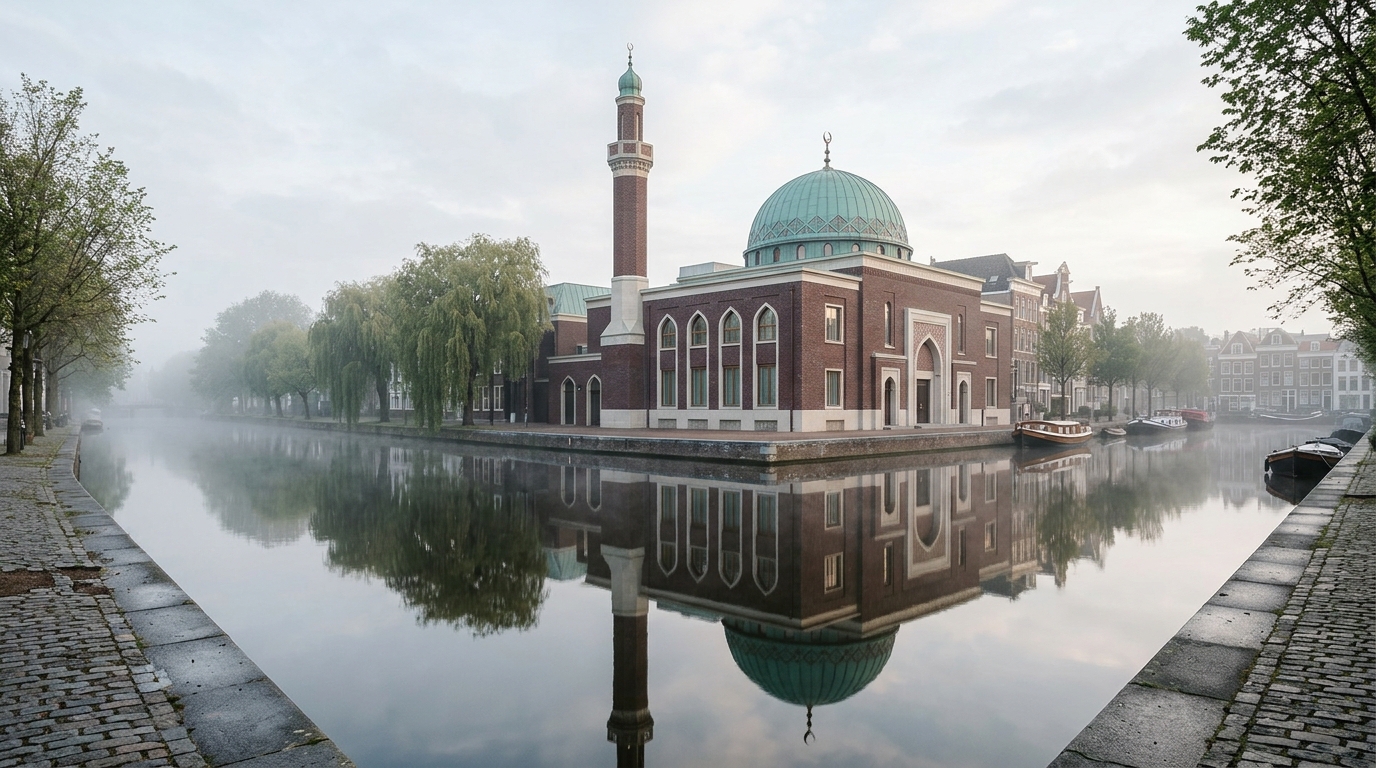
Welcoming a Muslim child into the world in the Netherlands (Nederland) is a sacred family milestone that bridges classical Islamic heritage with the civic, legal, and healthcare framework of Dutch society. Home to over 1 million Muslims—approximately 5.8% to 6.0% of the population—the Dutch Muslim community is distinguished by rich cultural lineages: predominantly Moroccan and Turkish families spanning multiple generations, alongside vibrant Surinamese, Somali, Afghan, Pakistani, and Syrian diasporas. Whether registering a newborn in Amsterdam, Rotterdam, The Hague (Den Haag), Utrecht, or Eindhoven, Muslim parents strive to bestow virtuous muslim names and authentic islamic names reflecting Quranic roots and prophetic Sunnah, while navigating the statutory 3-day civil birth declaration (geboorteaangifte) and world-renowned Dutch maternity care (kraamzorg).
أُعِيذُكَ بِكَلِمَاتِ اللَّهِ التَّامَّةِ، مِنْ كُلِّ شَيْطَانٍ وَهَامَّةٍ، وَمِنْ كُلِّ عَيْنٍ لَامَّةٍ
“I seek refuge for you in the perfect words of Allah, from every devil and harmful creature, and from every envious, harmful eye.”
The Prophet Muhammad ﷺ recited this noble supplication over his beloved grandsons Al-Ḥasan and Al-Ḥusayn (Sahih al-Bukhari 3371, from Ibn ‘Abbas). In authentic Sunnah adab, recite uʿīdhuka (أُعِيذُكَ) when blessing a baby boy, and uʿīdhuki (أُعِيذُكِ) when blessing a baby girl.
1. Demographics & Dutch Islamic Heritage
The Netherlands is home to between 1.0 and 1.1 million Muslim citizens and permanent residents, representing approximately 5.8% to 6.0% of the Dutch population according to demographic studies by the Centraal Bureau voor de Statistiek (CBS). In major urban centers—often referred to as the Randstad conurbation—the Muslim presence is particularly pronounced, accounting for between 12% and 15% of residents in Amsterdam, Rotterdam, The Hague, and Utrecht.
Exploring the historical origin of muslim presence in the Low Countries reveals centuries of maritime trade and diplomatic exchanges, dating back to 17th-century treaties between the Dutch Republic and the Ottoman Empire and Moroccan Sultanates. The contemporary era is shaped by pioneering guest workers (gastarbeiders) who arrived in the 1960s and 1970s, whose children and grandchildren have built thriving academic, commercial, and civic institutions.
Vibrant Cultural Lineages Across the Netherlands
The linguistic and cultural fabric of Dutch Muslims includes distinct communities that influence baby naming:
- Dutch-Moroccan Community: Representing the largest group (over 420,000 residents), predominantly hailing from the Rif region and classical Arab cultural centers, deeply rooted in Amsterdam-West, Rotterdam-Zuid, and Utrecht-Kanaleneiland. They cherish classical arab names and distinguished arab male names with Quranic resonance.
- Dutch-Turkish Community: Over 430,000 citizens with strong community infrastructure (ISN / Diyanet and Milli Görüş), celebrated for preserving dual-register names uniting Turkish phonetics with Arabic Islamic heritage.
- Surinamese Muslim Diaspora: Bringing rich Hindustani and Javanese Muslim traditions established since Suriname's independence in 1975, celebrated in The Hague and Amsterdam-Zuidoost.
- Somali, Afghan, Iraqi & Syrian Families: Adding rich traditions of Quranic memorization and classical Arabic nomenclature.
- Pakistani Diaspora: While smaller than in the UK, families searching for pakistani names and South Asian islamic naam options contribute dynamic business and educational networks across the Randstad.
Among Dutch Muslim parents, choosing an honorable islamic muslim name or elegant islamic ladies name involves honoring the absolute oneness of allah in islam and the noble prophets of allah—from Adam (a common search query: adam muslim) to Ibrahim, Musa, Isa, and Muhammad ﷺ (muhammad rasul allah). Parents deliberately avoid names associated with punishment or the eschatological fire (jahannam in islam), seeking instead names reflecting divine mercy and noble character.
2. Pediatric Emergency Protocol: Clinical Priority & Prophetic Hadith
SPOEDGEVAL: Fever in Infants Under 3 Months Requires Immediate Medical Assessment
Under clinical guidelines established by the Nederlandse Vereniging voor Kindergeneeskunde (NVK), Thuisarts.nl, and the Nederlands Huisartsen Genootschap (NHG), any infant younger than 3 months (jonger dan 3 maanden / 90 dagen) with a rectal temperature of 38.0°C (100.4°F) or higher constitutes an acute medical emergency (*spoedgeval*). Because a neonate's blood-brain barrier and immune system are still developing, a fever can signal a rapidly progressing invasive bacterial infection (neonatal sepsis, pyelonephritis, or bacterial meningitis).
Immediate Emergency Steps & Contacts in the Netherlands:
- During Business Hours (08:00–17:00): Contact your registered Huisarts (family doctor) immediately. State clearly: "Mijn baby is jonger dan 3 maanden en heeft koorts (38°C of hoger)."
- Evenings, Weekends & Holidays: Call the local Huisartsenpost (HAP) immediately for urgent triage and an on-duty doctor consultation.
- Acute Life-Threatening Signs: If your baby is lethargic, struggling to breathe, groaning, pale/gray, or has non-blanching red/purple spots, call 112 (Ambulance) immediately.
- Direct Presentation: Proceed immediately to the nearest hospital with a specialized pediatric department (*Kinder-Spoedeisende Hulp*, e.g., Emma Kinderziekenhuis Amsterdam, Erasmus MC Sophia Rotterdam, Wilhelmina Kinderziekenhuis Utrecht).
⚠️ Never delay medical consultation to perform spiritual recitations. In Islamic law, preserving life (Hifz an-Nafs) is the supreme religious obligation (*Farḍ*).
The Prophetic Command to Seek Professional Medical Remedies
Seeking modern clinical medicine is an authentic Sunnah commanded by the Messenger of Allah ﷺ. Our tradition teaches that Allah has paired every ailment with an effective cure:
تَدَاوَوْا فَإِنَّ اللَّهَ عَزَّ وَجَلَّ لَمْ يَضَعْ دَاءً إِلَّا وَضَعَ لَهُ دَوَاءً، غَيْرَ دَاءٍ وَاحِدٍ الْهَرَمُ
“Seek medical treatment, for Allah has not created a disease without creating a remedy for it, except one disease: old age.”
— Sunan Abī Dāwūd (3855); Jami` at-Tirmidhi (2038); authenticated as Sahih by classical hadith scholars.Spiritual du'as and Quranic recitation accompany professional healthcare with peace of heart (*sakeenah*), but they do not replace emergency clinical triage, hospital antibiotics, or pediatric medical intervention.
3. Ruqyah Shar'iyyah: Authentic Protection, Evil Eye & Pastoral Adab
In the Netherlands, thousands of Muslim parents explore authentic spiritual protection, seeking clarity around terms such as roqya, rokya chr3iya, ruqyah, and understanding the widespread curiosity surrounding evils eye, evil eye meaning, lucky eye meaning, and common typographical search queries like dvil eyes. Grounding newborn protection in authentic Sunnah principles dispels confusion and aligns parental practice with pure Islamic Tawhid.
The Three Scholarly Conditions for Valid Ruqyah Shar'iyyah
In Fatḥ al-Bārī, the illustrious Shafi'i hadith authority Hafidh Ibn Ḥajar al-ʿAsqalānī outlined the unanimous scholarly consensus governing lawful spiritual recitation:
- Composed Exclusively of the Word of Allah or His Names: Recitation must be from the Holy Quran or authentic prophetic prayers invoking the name of allah through His Beautiful Names (99 name allah / Asma' Allah al-Husna).
- Clear, Understandable Language: Recited in clear Arabic or comprehensible words whose meaning is completely understood. Any whispered gibberish, numerological squares, or occult talismans are strictly forbidden.
- Firm Conviction in Divine Agency: Parents must believe that ruqyah holds no intrinsic power of its own; healing occurs solely through the will and mercy of the god of muslim religion, Allah (*ash-Shāfī*).
The Authentic Prophetic Protection Prayer (Ṣaḥīḥ al-Bukhārī 3371)
Recited by the Prophet Muhammad ﷺ to place his grandchildren under Allah’s divine protection:
أُعِيذُكَ بِكَلِمَاتِ اللَّهِ التَّامَّةِ، مِنْ كُلِّ شَيْطَانٍ وَهَامَّةٍ، وَمِنْ كُلِّ عَيْنٍ لَامَّةٍ
Transliteration: Uʿīdhuka bi-kalimāti-llāhi-t-tāmmati min kulli shayṭānin wa hāmmatin wa min kulli ʿaynin lāmmah.
أُعِيذُكِ بِكَلِمَاتِ اللَّهِ التَّامَّةِ، مِنْ كُلِّ شَيْطَانٍ وَهَامَّةٍ، وَمِنْ كُلِّ عَيْنٍ لَامَّةٍ
Transliteration: Uʿīdhuki bi-kalimāti-llāhi-t-tāmmati min kulli shayṭānin wa hāmmatin wa min kulli ʿaynin lāmmah.
أُعِيذُكُمَا بِكَلِمَاتِ اللَّهِ التَّامَّةِ، مِنْ كُلِّ شَيْطَانٍ وَهَامَّةٍ، وَمِنْ كُلِّ عَيْنٍ لَامَّةٍ
Transliteration: Uʿīdhukumā bi-kalimāti-llāhi-t-tāmmati min kulli shayṭānin wa hāmmatin wa min kulli ʿaynin lāmmah.
The Sunnah Practice of Nafth (Dry-Breath Blessing)
As recorded in Sahih al-Bukhari (5017) and Sahih Muslim (2192), Aisha (may Allah be pleased with her) narrated that the Prophet ﷺ practiced Nafth (نَفْث) when blessing family members:
- Step 1: Bring your clean hands together, palms facing upward.
- Step 2: Recite with sincerity the Mu'awwidhatayn: Surah Al-Ikhlas (112), Surah Al-Falaq (113), and Surah An-Nas (114), alongside Ayat al-Kursi (2:255).
- Step 3: Perform Nafth—a delicate, dry breath without spittle directly into your cupped palms.
- Step 4: Gently wipe your hands over the baby's head, face, chest, and arms, invoking Allah's spiritual sanctuary. Saying in shaa allah in arabic (إِنْ شَاءَ اللَّهُ) whenever contemplating future blessings grounds every hope in divine decree.
Pastoral Clarity: The Evil Eye (*Boze Oog / Nazar*) vs. Lucky Eye Charms
In Islamic theology, the evil eye (al-ʿAyn / Dutch: het boze oog / Turkish: nazar) is real, as confirmed in Sahih Muslim (2187): “The evil eye is a reality; and if anything were to precede the divine decree, it would be the evil eye.”
However, widespread cultural charms—popularly known in Dutch markets as lucky eye charms, the Turkish blue glass bead (nazar boncuğu), the Hand of Fatima (Khamsa), or black strings and folded paper pouches (ta'weez)—are strictly prohibited in orthodox Islamic jurisprudence as forms of minor polytheism (shirk asghar).
The Prophet ﷺ stated unequivocally: “Whoever hangs an amulet has committed an act of polytheism” (Musnad Ahmad 16969, Sahih). An inanimate blue glass bead has zero power to protect a child. Authentic protection is achieved solely through direct prayer to Allah, reciting the Quran, and sincere parental reliance (*Tawakkul*).
4. Classical Āyāt ash-Shifā: The Six Quranic Healing Verses
Compiled by the renowned 5th-century Hijri scholar Imam Abū al-Qāsim al-Qushayrī (376–465 AH / 986–1072 CE, author of Al-Risālah al-Qushayriyyah), the Six Āyāt ash-Shifā represent the specific Quranic verses wherein divine healing (*Shifā'*) is explicitly promised. Dutch Muslim parents recite these verses over expectant mothers and newborns for peace, blessing, and comfort:
وَيَشْفِ صُدُورَ قَوْمٍ مُّؤْمِنِينَ
Transliteration: Wa yashfi ṣudūra qawmim mu'minīn
Meaning: “And [Allah] shall heal the breasts of a believing people.”
يَا أَيُّهَا النَّاسُ قَدْ جَاءَتْكُم مَّوْعِظَةٌ مِّن رَّبِّكُمْ وَشِفَاءٌ لِّمَا فِي الصُّدُورِ وَهُدًى وَرَحْمَةٌ لِّلْمُؤْمِنِينَ
Transliteration: Yā ayyuhan-nāsu qad jā'atkum maw'iẓatum mir-rabbikum wa shifā'ul limā fiṣ-ṣudūri wa hudaw wa raḥmatul lil-mu'minīn
Meaning: “O mankind! There has come to you instruction from your Lord and a healing for what is in the breasts, and guidance and mercy for the believers.”
يَخْرُجُ مِن بُطُونِهَا شَرَابٌ مُّخْتَلِفٌ أَلْوَانُهُ فِيهِ شِفَاءٌ لِّلنَّاسِ
Transliteration: Yakhruju mim buṭūnihā sharābum mukhtalifun alwānuhu fīhi shifā'ul lin-nās
Meaning: “There comes forth from their bellies a drink of varying colors, wherein is healing for mankind.”
وَنُنَزِّلُ مِنَ الْقُرْآنِ مَا هُوَ شِفَاءٌ وَرَحْمَةٌ لِّلْمُؤْمِنِينَ
Transliteration: Wa nunazzilu minal-qur'āni mā huwa shifā'uw wa raḥmatul lil-mu'minīn
Meaning: “And We send down from the Quran that which is a healing and a mercy to the believers.”
وَإِذَا مَرِضْتُ فَهُوَ يَشْفِينِ
Transliteration: Wa idhā mariḍtu fa-huwa yashfīn
Meaning: “And when I am ill, it is He who heals me.” (Supplication of Prophet Ibrahim عليه السلام).
قُلْ هُوَ لِلَّذِينَ آمَنُوا هُدًى وَشِفَاءٌ
Transliteration: Qul huwa lilladhīna āmanū hudaw wa shifā'
Meaning: “Say: 'It is, for those who believe, a guidance and a healing.'”
5. Sunnah Newborn Milestones & Dutch Kraamzorg
Welcoming a child according to the Sunnah in the Netherlands integrates prophetic rites with the supportive framework of Dutch maternity care:
Day 1: Adhān & Taḥnīk
Whether giving birth at home (a cherished Dutch tradition) or in a hospital (ziekenhuis bevalling), the father gently whispers the Adhān into the baby’s right ear, ensuring the proclamation of Tawhid is the first message received.
Taḥnīk: Gently rubbing a tiny portion of softened date against the baby's upper palate for physical blessing and digestive preparation.
Days 1–8: Dutch Kraamzorg Support
The Netherlands is unique globally for its Kraamzorg system. A licensed maternity assistant (*kraamverzorgster*) provides 24 to 49 hours of dedicated home care over the first 8 to 10 days, monitoring infant weight, jaundice, maternal healing, and breastfeeding.
Dutch kraamzorg agencies routinely accommodate Halal dietary needs and Islamic modesty preferences in the home.
Day 7: Tasmiyah & ʿAqīqah
In accordance with the authentic hadith of Samurah ibn Jundub (Sunan Abi Dawud 2838), the child is formally named on the seventh day.
ʿAqīqah: Two sheep or goats for a boy, one for a girl. Families arrange fresh sacrifice via certified Dutch halal slagers or delegate abroad through Dutch Islamic charities (e.g. Islamic Relief Nederland, Stichting Islah, Muslim Hands).
Halq (Shaving Hair) & Khitān (Circumcision)
Halq: Shaving the head on Day 7 and donating the equivalent weight of hair in silver as charitable Sadaqah.
Khitān: In the Netherlands, ritual circumcision is considered non-therapeutic and is not covered by standard basic health insurance (basisverzekering). It is performed safely in specialized clinical centers (such as Besnijdenis Centrum Nederland) by licensed medical doctors using clinical local anesthesia (*verdoving*).
6. Gemeente Birth Registration: BW Boek 1 Artikel 16, Maiden Names & BSN
Declaring a newborn in the Netherlands involves strict statutory requirements governed by Book 1 of the Dutch Civil Code (Burgerlijk Wetboek):
The Strict 3-Business-Day Statutory Deadline (Burgerlijk Wetboek Boek 1 Artikel 16)
Under Burgerlijk Wetboek Boek 1 Artikel 16, every birth must be officially declared to the Burgerlijke Stand within 3 working days (werkdagen):
- Calculation of Days: The day of delivery does not count. For example, if a baby is born on a Monday, you have until Thursday to register.
- Weekends & Holidays: If a delivery occurs on a Thursday, Friday, or weekend, or if the deadline coincides with an official Dutch holiday (officiële feestdag), the deadline is extended to the next business day.
- Where to Register: At the Gemeente (municipality) where the birth physically occurred, not necessarily where the parents reside. If your baby is born in an Amsterdam hospital but you live in Zaandam, you must declare the birth in Amsterdam under Burgerlijk Wetboek Boek 1 Artikel 16.
- Online Declaration via DigiD: Most major Dutch municipalities (Amsterdam, Rotterdam, Den Haag, Utrecht, Eindhoven) now allow digital birth declaration (*online geboorteaangifte*) via DigiD with proof of birth from the midwife or hospital.
Choosing Given Names (Burgerlijk Wetboek Boek 1 Artikel 18)
Under Dutch civil law governed by Burgerlijk Wetboek Boek 1 Artikel 18, parents have broad freedom in choosing given names (voornamen). However, civil registrars (ambtenaren van de burgerlijke stand) exercise statutory oversight:
- Grounds for Refusal: Registrars will reject names that are offensive, ridiculous, indecent (*ongepast*), or identical to an existing family surname unless it is established as a recognized given name.
- Alphabet & Diacritics: Under Burgerlijk Wetboek Boek 1 Artikel 18, names must be entered in the Latin alphabet. Official European diacritics (é, è, ë, ï, ö) are supported, but non-Latin characters (Arabic script) cannot be recorded on Dutch birth certificates.
- Multiple Given Names: Parents may record multiple given names (e.g., Zayan Muhammad or Inaya Maryam), allowing children to carry both an honored spiritual name and a primary given name.
Patronymic Lineage (Nasab) & Dutch Preservation of Maiden Names
A remarkable area of alignment between Dutch civil registration and Islamic jurisprudence is the preservation of a woman's maiden family name:
Islamic Jurisprudence (Nasab): Islam commands that every individual maintains their patronymic lineage through their biological father (Surah Al-Ahzab 33:5). A woman never forfeits her father's family name upon marriage.
Dutch Civil Registration (BRP): In the Netherlands, marriage does not legally alter a person's surname! In the official population registry (Basisregistratie Personen - BRP), passport, and driving licence, a woman's legal surname remains permanently her birth surname (geboortenaam / meisjesnaam). Her husband's surname is purely an optional customary form of address (aanschrijfnaam). This Dutch legal principle directly reflects classical Islamic law.
Child's Surname: Under Dutch surname law (including the recent Wet gecombineerde geslachtsnaam), parents can choose to bestow the father's surname, the mother's surname, or a combined surname. Bestowing the father's surname satisfies classical Shariah and Dutch civil legal requirements seamlessly.
Administrative Integration: BSN, Consultatiebureau & SVB
Following registration at the Gemeente, Dutch institutional integration proceeds automatically:
- BSN (Burgerservicenummer): The infant is immediately assigned a Citizen Service Number (BSN), required for health insurance enrollment, passport issuance, and social benefits.
- Consultatiebureau (JGZ): The local youth health clinic contacts parents for free routine infant health checks, hearing screenings, and developmental milestones.
- SVB (Kinderbijslag): The Sociale Verzekeringsbank automatically enrolls your family for quarterly Dutch Child Benefit (kinderbijslag).
7. Trending Dutch Muslim Baby Names: Etymologies & Meaning
Selecting a baby name in the Netherlands requires balancing classical Arabic root authenticity, spiritual resonance, and smooth Dutch pronunciation. Below is a scholar-verified directory of popular Muslim boy and girl names favored across Dutch Muslim households:
Distinguished Names for Baby Boys (Jongensnamen)
Root: z-y-n (Adornment, Grace)
Signifies one who beautifies or possesses natural grace. Highly popular in Amsterdam and Rotterdam for its melodious cadence and effortless Dutch phonetics.
Meaning: Brave Lion
Symbolizes moral courage, nobility, and leadership. Cherished among multicultural families across the Randstad.
Root: r-ḥ-m (Mercy, Kindness)
Derived from the divine attribute Arham ar-Rahimin, reflecting profound compassion, warmth, and mercy.
Meaning: Radiant Gift from Allah
Reflects spiritual brilliance and generosity. Favored for its clean two-syllable rhythm across Dutch registries.
Root: b-y-n (Clarity, Distinction)
A classic name borne by early righteous scholars, denoting one who is articulate, clear-minded, and prominent.
Meaning: Sovereign King, Guardian
Denotes royal majesty, protective leadership, and steadfast character.
Root: ʿ-r-ḍ (Prominence, Respected)
Means a respectable man or a rain-bearing cloud that brings life and renewal.
Root: r-w-ḥ (Spirit, Serenity)
Signifies spiritual purity, sweet fragrance of Paradise, and elevated soul.
Prophetic Heritage
Honoring the noble Prophet Daniel (peace be upon him), famed for intellectual wisdom and upright judgment.
Prophetic: The First Prophet of Allah
Consistently ranks among the top boy names across the entire Netherlands, popular with parents searching for adam muslim names due to its universal ease of pronunciation in Dutch.
Divine Attribute: Servant of the One
Reflecting devoted servitude to the Unique, Indivisible Creator (connecting directly with searches for abd al ahad islam).
Root: ḥ-m-d (Praise, Gratitude)
The blessed name of the Final Messenger of Allah ﷺ (muhammad rasul allah). Consistently among the top registered boy names in Amsterdam, Rotterdam, and The Hague.
Graceful Names for Baby Girls (Meisjesnamen / Islamic Ladies Name Selections)
Root: ʿ-n-y (Divine Providence, Care)
Signifies divine care and protection. Consistently one of the most beloved Muslim girl names in the Netherlands.
Meaning: Light of Allah, Joyful Radiance
Denotes lively joy and spiritual warmth. Celebrated for its gentle acoustic elegance in Dutch society.
Quranic Resonance: Garment of Serenity
Evoking Surah Al-Muzzammil (73:1), meaning an enveloping mantle of modesty, warmth, and tranquility.
Meaning: Noble, Respectable
Denotes an honorable woman of clarity and vision. A contemporary favorite among young Dutch Muslim parents.
Root: n-w-b (Turning to Allah)
Connected to the Quranic virtue of Inābah—turning devoutly toward Allah in repentance, prayer, and peace.
Symbolic: Fragrant Flower of Jannah
Metaphorically celebrated as a luminous blossom in Paradise that radiates sweet fragrance and beauty.
Root: m-h-r (Skilled, Accomplished)
Denotes an accomplished, capable woman of intellect, wisdom, and resourcefulness.
Quranic: Surah Al-Haqqah (69:23)
Directly mentioned in the Quran describing the low-hanging, approachable fruit clusters of Paradise (*quṭūfuhā dāniyah*).
Root: h-n-a (Pleasant, Blessed Joy)
Signifies a woman who is pleasant, blessed, and brings delightful happiness to her home.
Prophetic: Mother of Prophet Isa (Jesus)
The sole woman named directly in the Quran with a dedicated Surah. Revered for devotion, purity, and spiritual strength.
Prophetic Family: Sayyidat Nisa' al-Alamin
The beloved daughter of the Prophet Muhammad ﷺ (Fāṭimah az-Zahrā'), leader of the women of Paradise, widely cherished across Moroccan, Turkish, and Surinamese families.
Quranic: Surah An-Nur (24:35)
Signifies divine light, wisdom, and moral radiance. Seamlessly blends with Dutch phonetics.
8. Metropolitan Directory: 5 Dutch Hubs on NoorNama
Discover comprehensive, localized Muslim baby naming guides tailored specifically to the Netherlands' major metropolitan centers. Each guide covers municipal Gemeente registration steps, local certified Halal ʿAqīqah services, historic neighborhood mosques, and community naming traditions:
Amsterdam →
Capital & Cultural Epicenter
Home to the canal-side Westermoskee Ayasofya, vibrant communities in Nieuw-West, Bos en Lommer, and Oost, with dedicated DigiD birth registration at Gemeente Amsterdam.
Explore Amsterdam Guide →Rotterdam →
Port Metropolis & Diverse Hub
Anchored by the grand Essalam Moskee (largest in the Netherlands) and Kocatepe Moskee, serving Rotterdam-Zuid and Feijenoord.
Explore Rotterdam Guide →The Hague (Den Haag) →
Government Seat & Multicultural City
Deep-rooted Moroccan, Turkish, and Surinamese communities across the Schilderswijk and Transvaalkwartier, anchored by Mescidi Aksa and Moskee El Ouma.
Explore The Hague Guide →Utrecht →
Central Junction & Ulu Mosque
Famous for the stunning glass minarets of Ulu Moskee on Moskeeplein in Lombok, serving vibrant families in Kanaleneiland and Overvecht.
Explore Utrecht Guide →Eindhoven →
Brainport High-Tech Hub
A forward-looking technology region supported by the historic Fatih Moskee and diverse international engineering and academic Muslim diaspora.
Explore Eindhoven Guide →