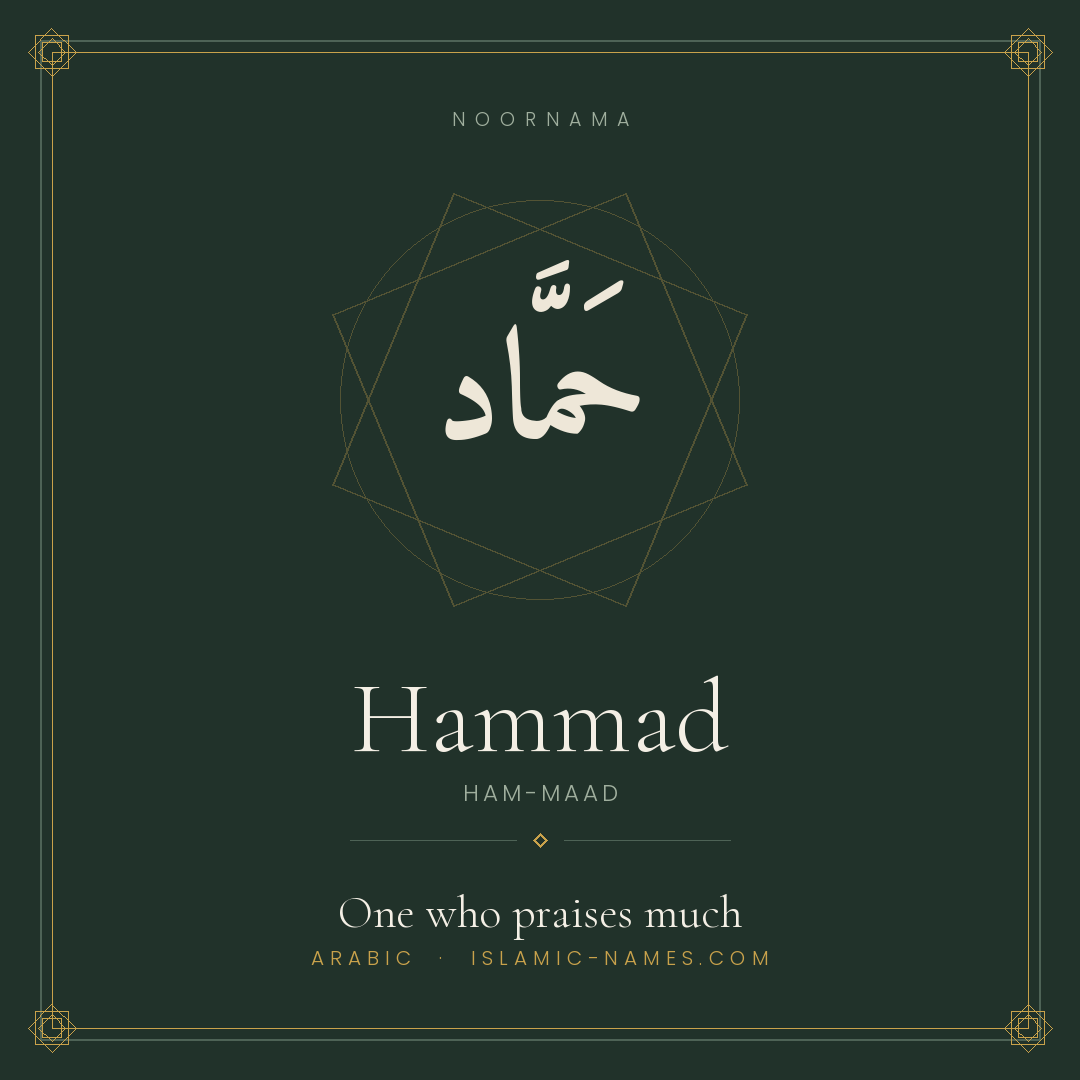
What is the meaning of the name Hammad Name Meaning, Origin & Islamic Significance in Islam?
The name Hammad Name Meaning, Origin & Islamic Significance is a traditional Islamic child name meaning "One who praises much". In Muslim culture, naming a child Hammad Name Meaning, Origin & Islamic Significance is deeply significant because of its beautiful spiritual connotations. It is a widely accepted and scholar-approved name drawn from authentic Islamic heritage, making it an excellent choice for parents seeking a meaningful name.
One who praises much
Hammad Name Meaning in Arabic
This content has been reviewed by our Scholarly Board. Name meanings are verified against classical Arabic dictionaries (Lisan al-Arab, Taj al-Arus) and authentic Hadith collections (Sahih al-Bukhari, Sahih Muslim, Sunan al-Tirmidhi).
The name Hammad springs from the triliteral root ح م د (ḥ-m-d), which conveys the act of praising, commending, or expressing gratitude. From this root flow some of the most beloved words in the Muslim lexicon: ḥamd (praise), maḥmūd (praiseworthy), and the universal invocation al-ḥamdu lillāh — “all praise belongs to Allah.” Hammad takes the intensive faʿʿāl pattern, indicating someone who performs the action abundantly and habitually.
Classical Arabic lexicons describe Hammad as one who praises frequently, whether in speech, deed, or disposition. The name appears in early Islamic generations, borne by scholars and narrators of hadith, attesting to its established usage among the righteous. Its linguistic architecture suggests not a momentary utterance but a sustained orientation of the soul toward gratitude — a living embodiment of the Quranic call to remember Allah’s favors and proclaim them.
Is Hammad Mentioned in the Quran?
While the specific name Hammad does not appear in the Quran, its root ح م د permeates the revelation. The opening chapter, Al-Fatiha, begins with Alḥamdulillāh, and the Quran repeatedly commands believers to be among the ḥāmidīn — those who praise and give thanks. Choosing a name from this root aligns with the Prophetic guidance to select names with beautiful meanings, as the Prophet ﷺ said: “The most beloved of your names to Allah are ʿAbdullāh and ʿAbdur-Raḥmān” (Muslim), and names expressing servitude and gratitude carry that same luminous spirit.
How to Pronounce Hammad
The classical Arabic pronunciation is ham-MAAD. The name flows easily in both Arabic and English, making it a practical choice for Muslim families in the USA, UK, Canada, and Australia.
| Pronunciation | Where It’s Common |
|---|---|
| ham-MAAD | Standard Arabic pronunciation with stress on the second syllable |
| HAM-ad | Common English approximation with equal stress |
| hum-MAAD | Regional variant heard in South Asian communities |
Hammad Spelling Variations: Hamad, Hammaad, Hammud & More
Choose the spelling that matches your family’s heritage:
| Spelling | Region / Community |
|---|---|
| Hamad | Simplified spelling common in Gulf regions |
| Hammaad | Double ‘a’ transliteration reflecting long vowel |
| Hammud | Variant with shortened vowel, found in classical texts |
| Hammed | Alternative transliteration used in North Africa |
| Hamaad | Another long-vowel representation in English |
Cute Nicknames for Hammad
Hammi, Hadi, Maddy, Hammoudi
Abjad Value of Hammad
In the traditional Abjad system of Arabic letter values, حَمَّاد calculates to 53. This classical scholarly numbering of Arabic letters is presented for knowledge only and carries no fortune-telling meaning. A child’s destiny is with Allah alone.
How Popular Is Hammad?
Hammad enjoys steady usage across the Arab world, South Asia, and Muslim communities in the West. Its clear Arabic pronunciation and positive meaning make it accessible cross-culturally. In the UK and US, it remains uncommon but recognizable, avoiding the pronunciation hurdles of some traditional names while retaining authentic Islamic roots.
The name’s connection to the universal concept of praise (ḥamd) gives it timeless appeal. Parents often choose Hammad hoping their son will embody gratitude — a quality the Prophet ﷺ linked to faith itself when he said: “Whoever does not thank people has not thanked Allah” (Tirmidhi).
Hammad & Muslim Baby Names Across American Cities
From the Muslim communities of Dearborn and New York to growing families in Houston, Chicago, Dallas, Los Angeles, Atlanta, and Minneapolis, parents searching for authentic Muslim boy names choose Hammad for its clear meaning and easy pronunciation. Explore our city naming guides for local trends and community favorites:
Muslim Names in Houston
Muslim Names in Chicago
Muslim Names in Dallas
Muslim Names in Los Angeles
All USA City Guides
Names That Pair Beautifully with Hammad
Sister Names
Hamida · Mahmuda · Hamdiyah · Hamna · Tahmidah · Hamama · Hameeda · Mahmooda
Brother Names
Ahmad · Muhammad · Hamid · Mahmoud · Hamza · Hammam · Mahmud · Tahmid
Frequently Asked Questions About the Name Hammad
Is Hammad mentioned in the Quran?
No, the name Hammad itself does not appear in the Quran. However, its root ح م د (ḥ-m-d) occurs frequently, most notably in Alḥamdulillāh (“All praise belongs to Allah”), which opens Surah Al-Fatiha and appears throughout the revelation.
What is the difference between Hammad and Hamid?
Both derive from ح م د. Hamid (حَامِد) is the active participle meaning “one who praises” or “praiseworthy.” Hammad (حَمَّاد) uses the intensive faʿʿāl form, emphasizing frequency and abundance — “one who praises much” or “constant praiser.”
Is Hammad a common name historically?
Yes, Hammad appears in classical Arabic sources and was borne by several early scholars and hadith narrators, such as Hammad ibn Salamah (d. 167 AH), a renowned traditionist. Its usage is well-attested in the first centuries of Islam.
How is Hammad pronounced in Arabic?
The standard pronunciation is ham-MAAD (حَمَّاد), with a short ‘a’ in the first syllable, a doubled ‘m’ (shaddah), and a long ‘aa’ in the second syllable. Stress falls on the final syllable.
Can Hammad be used for a girl?
Hammad is grammatically masculine in Arabic (faʿʿāl pattern for males). The feminine equivalent would be Hammādah (حَمَّادَة) or more commonly Hamida (حَامِدَة), both meaning “female frequent praiser.”
Sources & method: Meaning verified against classical Arabic sources. NoorNama presents Abjad values as classical scholarship only, never as fortune-telling. All destiny is with Allah سبحانه وتعالى.
Find the perfect name for your child
Check our complete database for free names, or get a personalized scholarly naming report based on the precise date of birth.
{“@context”: “https://schema.org”, “@type”: “Article”, “headline”: “Hammad Name Meaning, Origin & Islamic Significance”, “description”: “Hammad (حَمَّاد) means one who praises much. Complete Islamic naming guide: pronunciation, origin, and heritage.”, “author”: {“@type”: “Organization”, “name”: “NoorNama”, “url”: “https://islamic-names.com”}, “publisher”: {“@type”: “Organization”, “name”: “NoorNama”, “url”: “https://islamic-names.com”}, “about”: {“@type”: “Thing”, “name”: “Hammad (given name)”}}
{“@context”: “https://schema.org”, “@type”: “FAQPage”, “mainEntity”: [{“@type”: “Question”, “name”: “Is Hammad mentioned in the Quran?”, “acceptedAnswer”: {“@type”: “Answer”, “text”: “No, the name Hammad itself does not appear in the Quran. However, its root ح م د (ḥ-m-d) occurs frequently, most notably in Alḥamdulillāh (“All praise belongs to Allah”), which opens Surah Al-Fatiha and appears throughout the revelation.”}}, {“@type”: “Question”, “name”: “What is the difference between Hammad and Hamid?”, “acceptedAnswer”: {“@type”: “Answer”, “text”: “Both derive from ح م د. Hamid (حَامِد) is the active participle meaning “one who praises” or “praiseworthy.” Hammad (حَمَّاد) uses the intensive faʿʿāl form, emphasizing frequency and abundance — “one who praises much” or “constant praiser.””}}, {“@type”: “Question”, “name”: “Is Hammad a common name historically?”, “acceptedAnswer”: {“@type”: “Answer”, “text”: “Yes, Hammad appears in classical Arabic sources and was borne by several early scholars and hadith narrators, such as Hammad ibn Salamah (d. 167 AH), a renowned traditionist. Its usage is well-attested in the first centuries of Islam.”}}, {“@type”: “Question”, “name”: “How is Hammad pronounced in Arabic?”, “acceptedAnswer”: {“@type”: “Answer”, “text”: “The standard pronunciation is ham-MAAD (حَمَّاد), with a short ‘a’ in the first syllable, a doubled ‘m’ (shaddah), and a long ‘aa’ in the second syllable. Stress falls on the final syllable.”}}, {“@type”: “Question”, “name”: “Can Hammad be used for a girl?”, “acceptedAnswer”: {“@type”: “Answer”, “text”: “Hammad is grammatically masculine in Arabic (faʿʿāl pattern for males). The feminine equivalent would be Hammādah (حَمَّادَة) or more commonly Hamida (حَامِدَة), both meaning “female frequent praiser.””}}]}